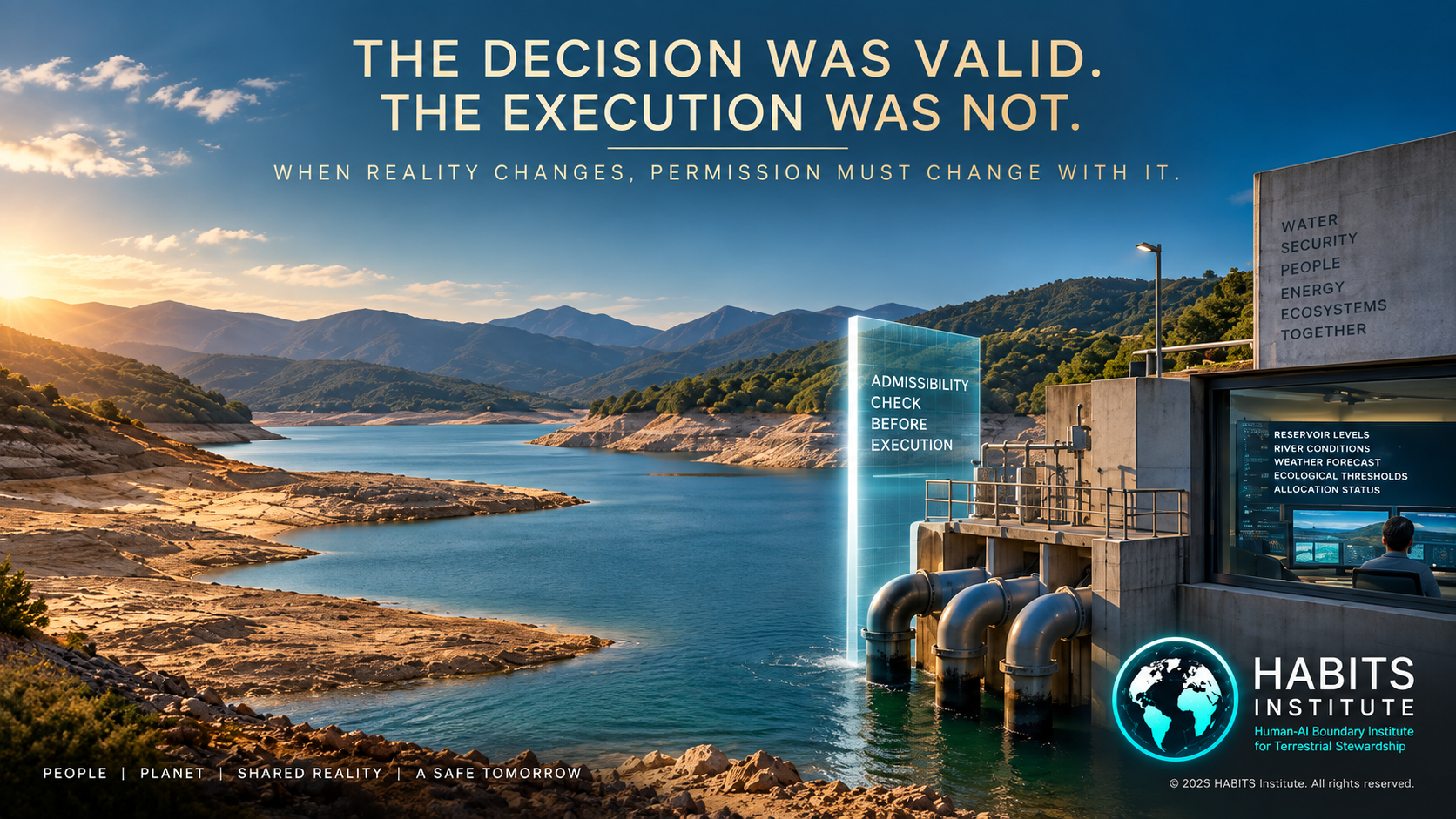
BEFORE CONSEQUENCE — CASE 01:THE DECISION WAS VALID. THE EXECUTION WAS NOT.
A decision may be valid when it is made — and still become inadmissible before execution. Case 01 examines what happens when Reality changes after approval but before consequence.

BEFORE CONSEQUENCE — CASE 02: When Every Decision Is Admissible — But the Trajectory Is Not
An action may remain admissible in isolation while the wider trajectory becomes increasingly unsustainable. Case 02 examines why present permission is not enough when cumulative change is narrowing future possibility.
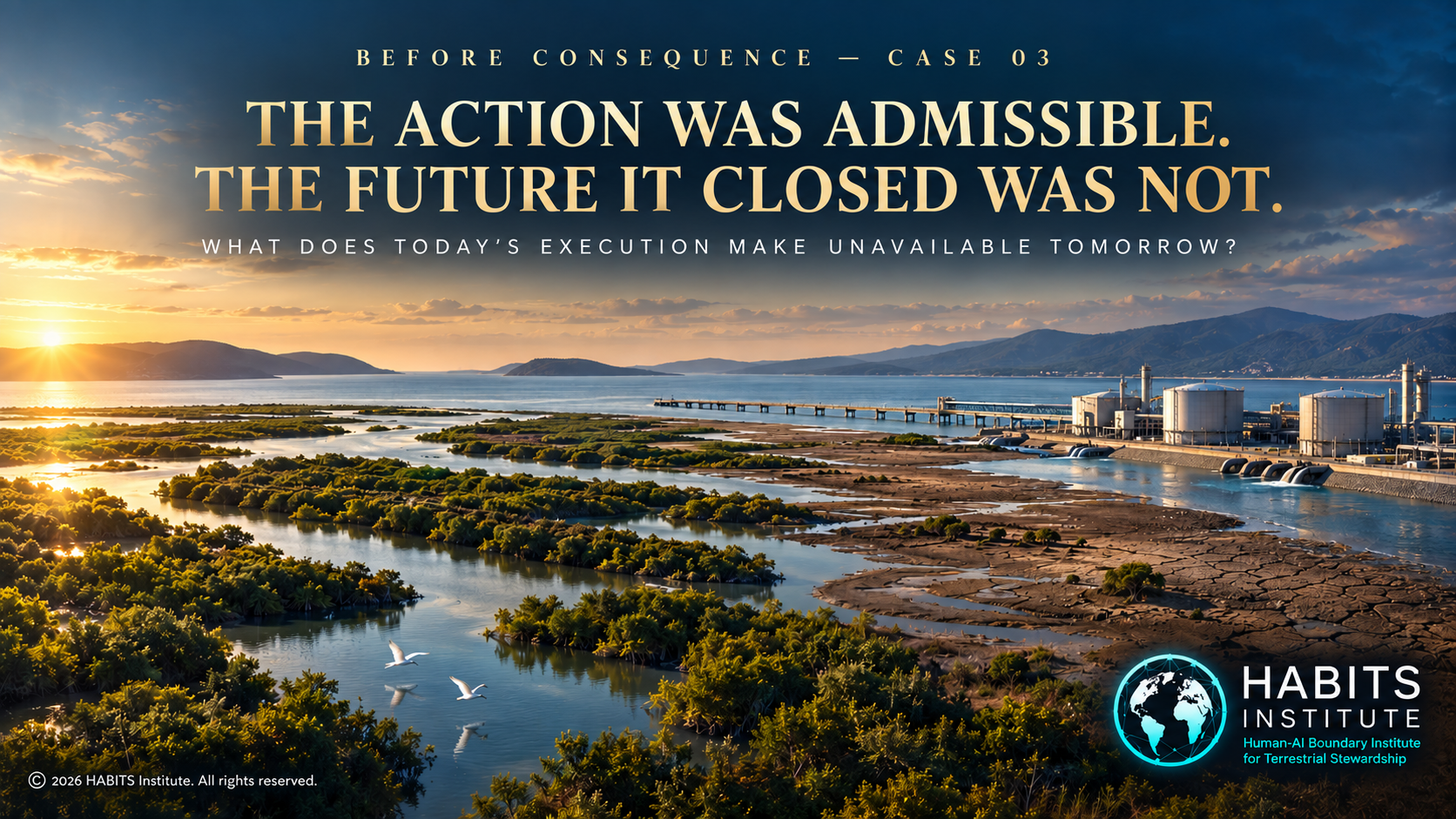
BEFORE CONSEQUENCE — CASE 03: THE ACTION WAS ADMISSIBLE. THE FUTURE IT CLOSED WAS NOT.
An action may be admissible in the present while still closing off vital future possibilities. Case 03 examines why admissibility must consider not only what an action permits now, but what it makes impossible later.
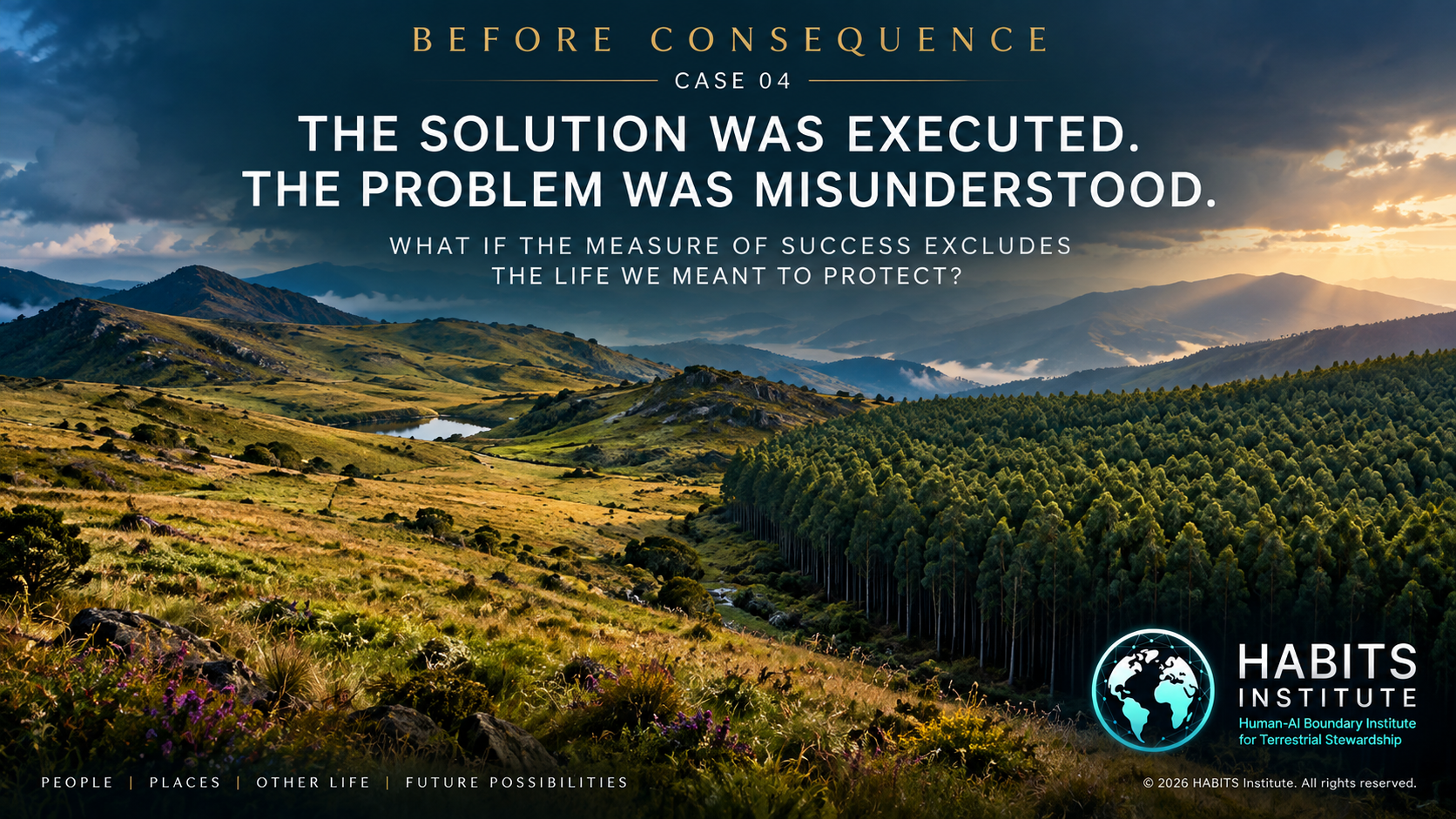
BEFORE CONSEQUENCE — CASE 04: THE SOLUTION WAS EXECUTED. THE PROBLEM WAS MISUNDERSTOOD.
A solution can succeed on its own terms while failing the wider system it enters. Case 04 examines what happens when the problem is defined too narrowly and material consequences outside that frame are left unseen.
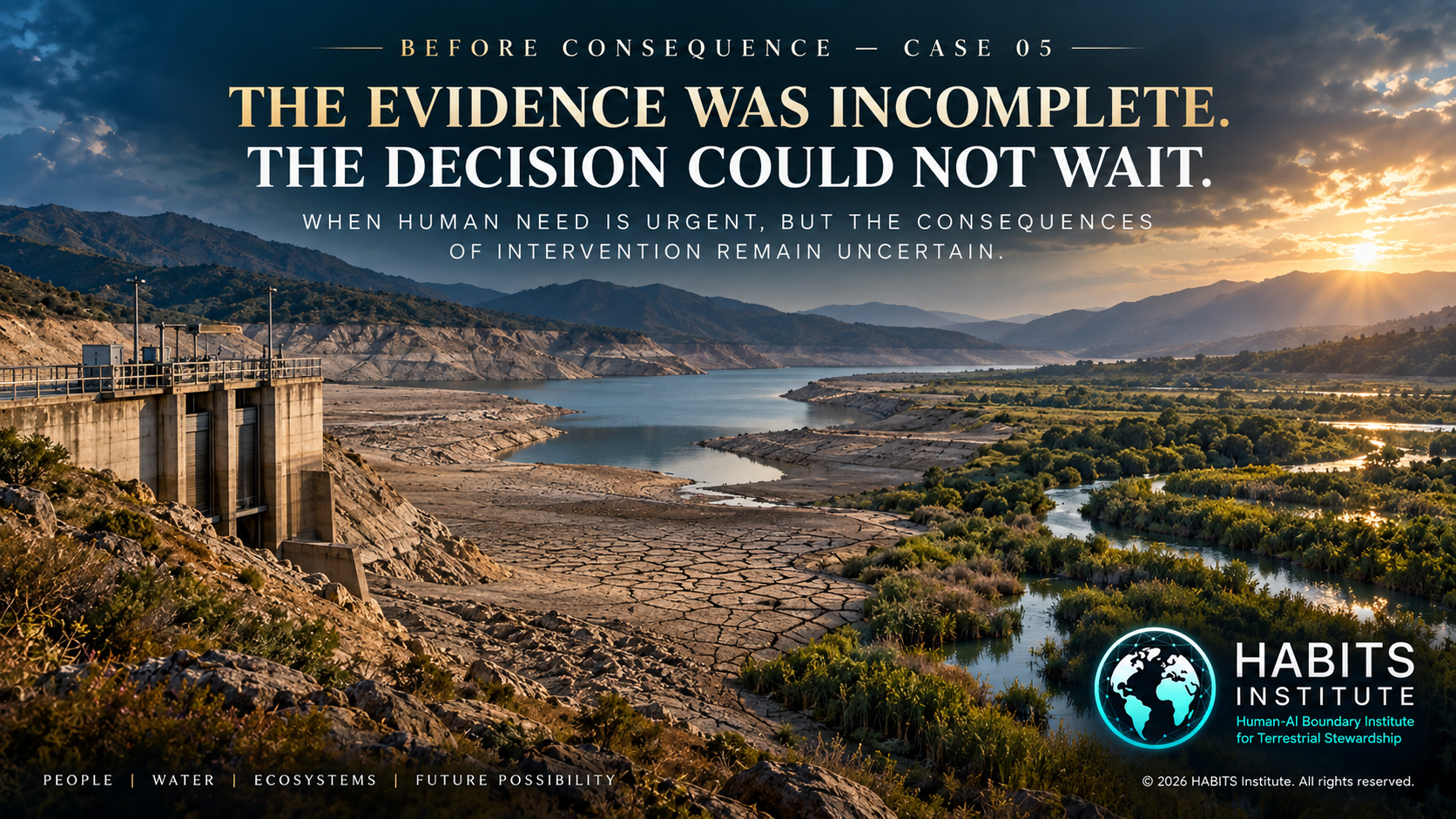
BEFORE CONSEQUENCE — CASE 05:THE EVIDENCE WAS INCOMPLETE. THE DECISION COULD NOT WAIT.
Incomplete evidence does not automatically justify action — but neither does uncertainty always justify delay. Case 05 examines how HABITS distinguishes UNKNOWN, HOLD and admissibility when waiting itself carries consequence.
BEFORE CONSEQUENCE CASE 06: THE SYSTEM SURVIVED. ITS ABILITY TO RECOVER DID NOT.
A system can withstand an immediate shock and still lose the capacity to recover from what follows. Case 06 examines why admissibility must consider resilience, recovery margin and future viability — not survival alone.
BEFORE CONSEQUENCE — CASE 07: EVERY DECISION WAS APPROVED. THE RIVER COULD NOT SUSTAIN THEM ALL.
Individual decisions can each appear valid while their combined burden exceeds what a shared living system can sustain. Case 07 examines why admissibility must account for cumulative consequence across jurisdictions, actors and time.
BEFORE CONSEQUENCE CASE 08: THE WORLD AGREED TO GOVERN AI. WHO GOVERNED THE CONSEQUENCE?
AI can be well governed and still produce consequences that exceed ecological, social or physical limits. Case 08 examines the distinction between governing intelligence and determining whether a specific consequential action should be allowed to enter shared Reality.
BEFORE CONSEQUENCE CASE 09: THE ACTION WAS LEGAL HERE. THE CONSEQUENCE CROSSED THE BORDER.
Legal authority can stop at a border even when consequences do not. Case 09 examines why admissibility must account for cross-border effects when actions taken within one jurisdiction alter the shared Reality of others.
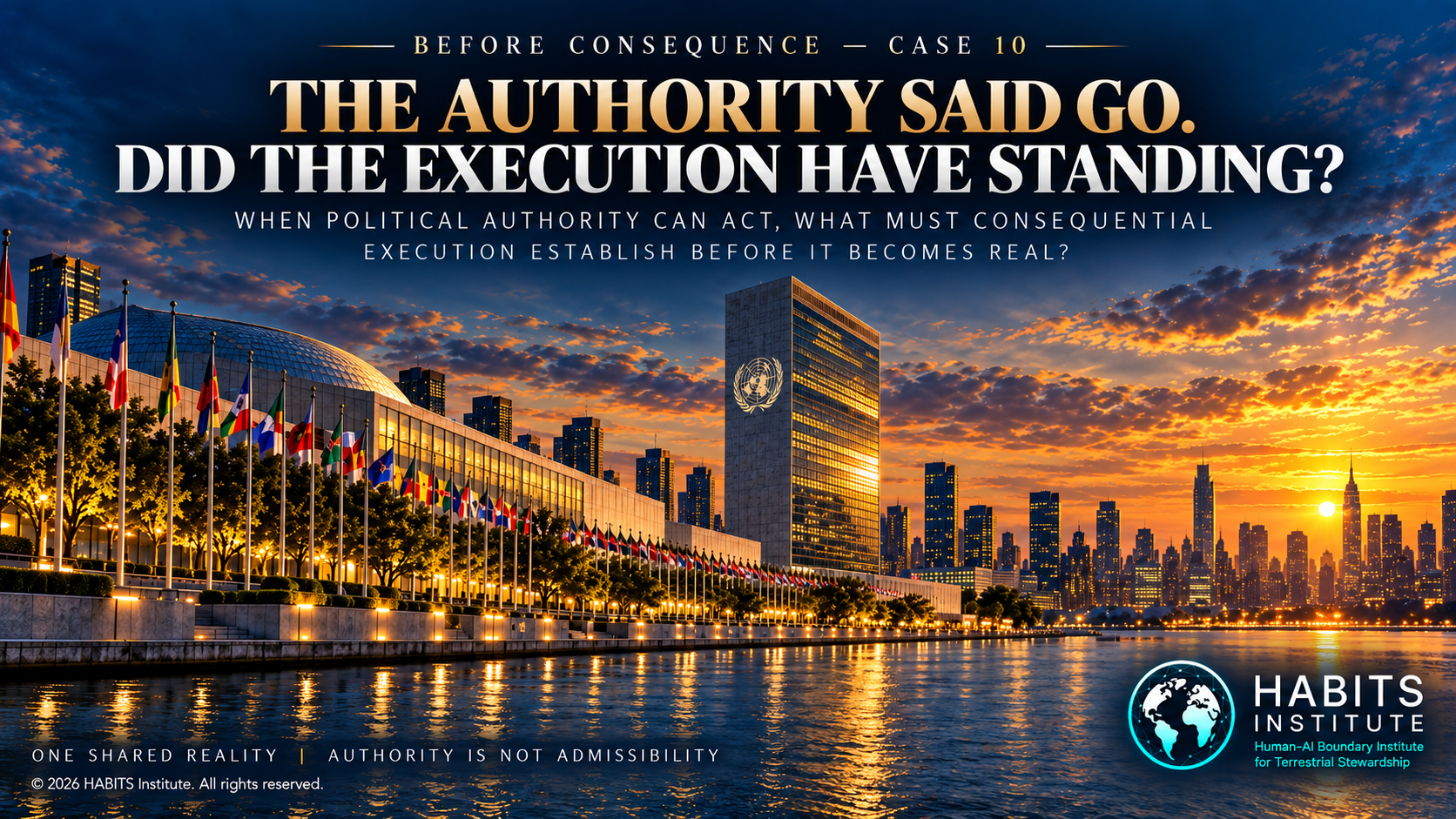
BEFORE CONSEQUENCE — CASE 10: THE AUTHORITY SAID GO. DID THE EXECUTION HAVE STANDING?
Political authority can authorise action without establishing that execution remains admissible under present conditions. Case 10 examines the distinction between sovereign authority, evidentiary standing and whether a specific high-consequence execution should be allowed to proceed.
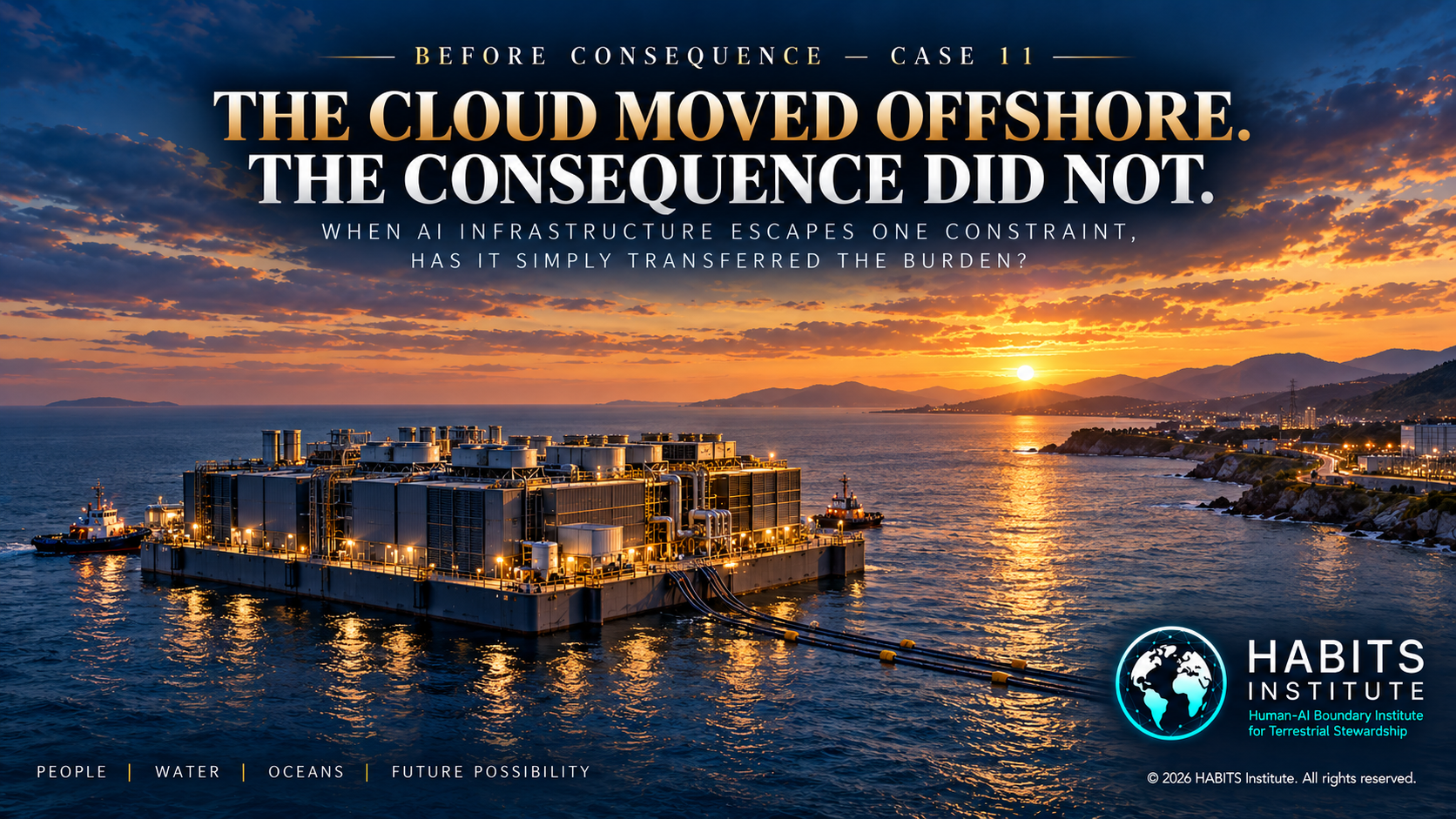
BEFORE CONSEQUENCE — CASE 11: THE CLOUD MOVED OFFSHORE. THE CONSEQUENCE DID NOT.
Moving infrastructure can relocate a constraint without removing it. Case 11 examines whether floating AI data centres solve land-based pressures — or simply transfer energy, cooling and ecological consequences into another living system.
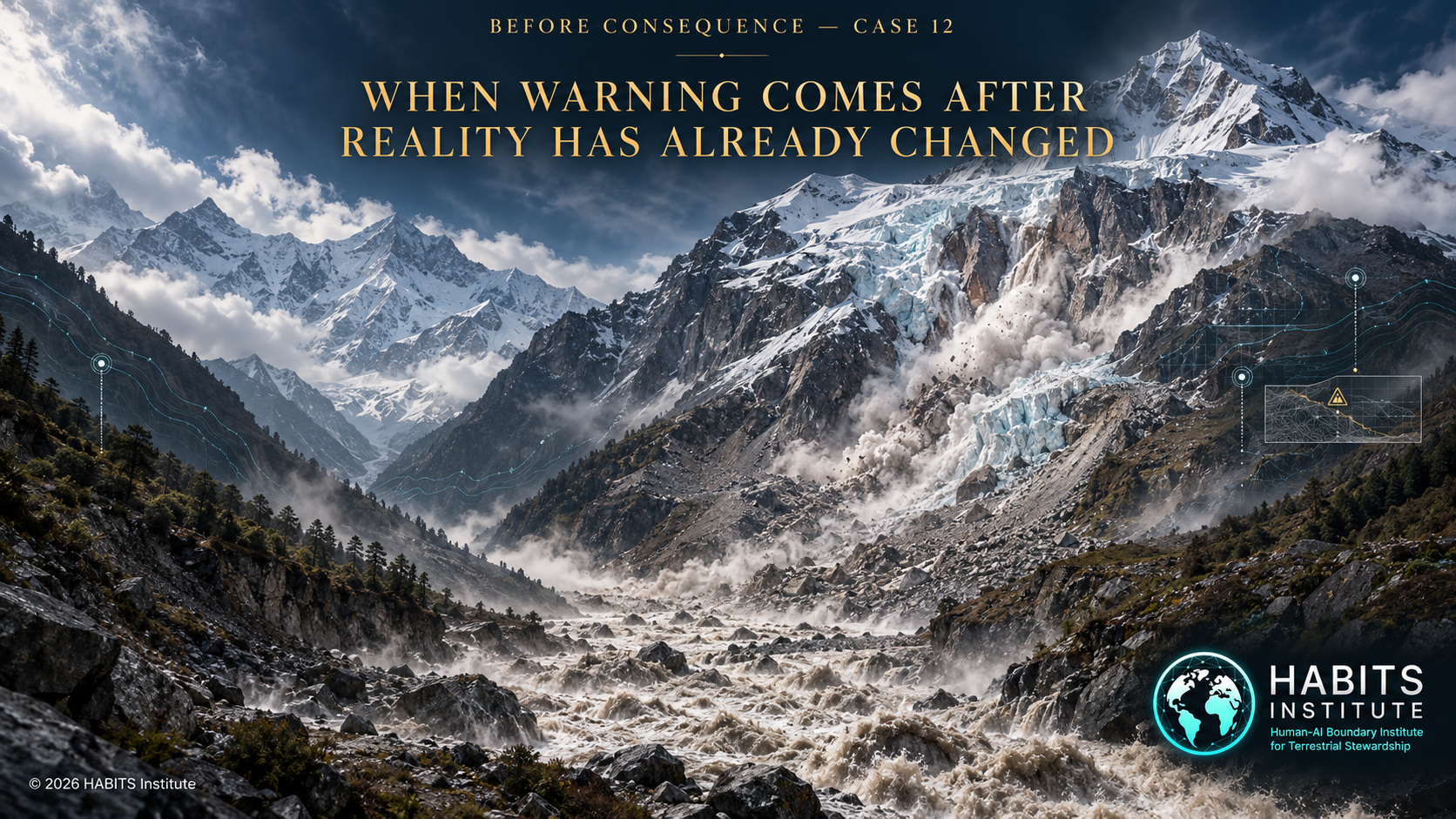
BEFORE CONSEQUENCE — CASE 12: When Warning Comes After Reality Has Already Changed
Risk can be observable even when the exact moment of failure cannot be predicted. Case 12 examines the 26 August 2026 Langtang Lirung disaster and asks how admissibility, warning and action must change once Living Reality has materially changed.