ARPI Insight
The Silence We Are Creating
Biodiversity loss, extractive intelligence, and the cost of misunderstanding nature
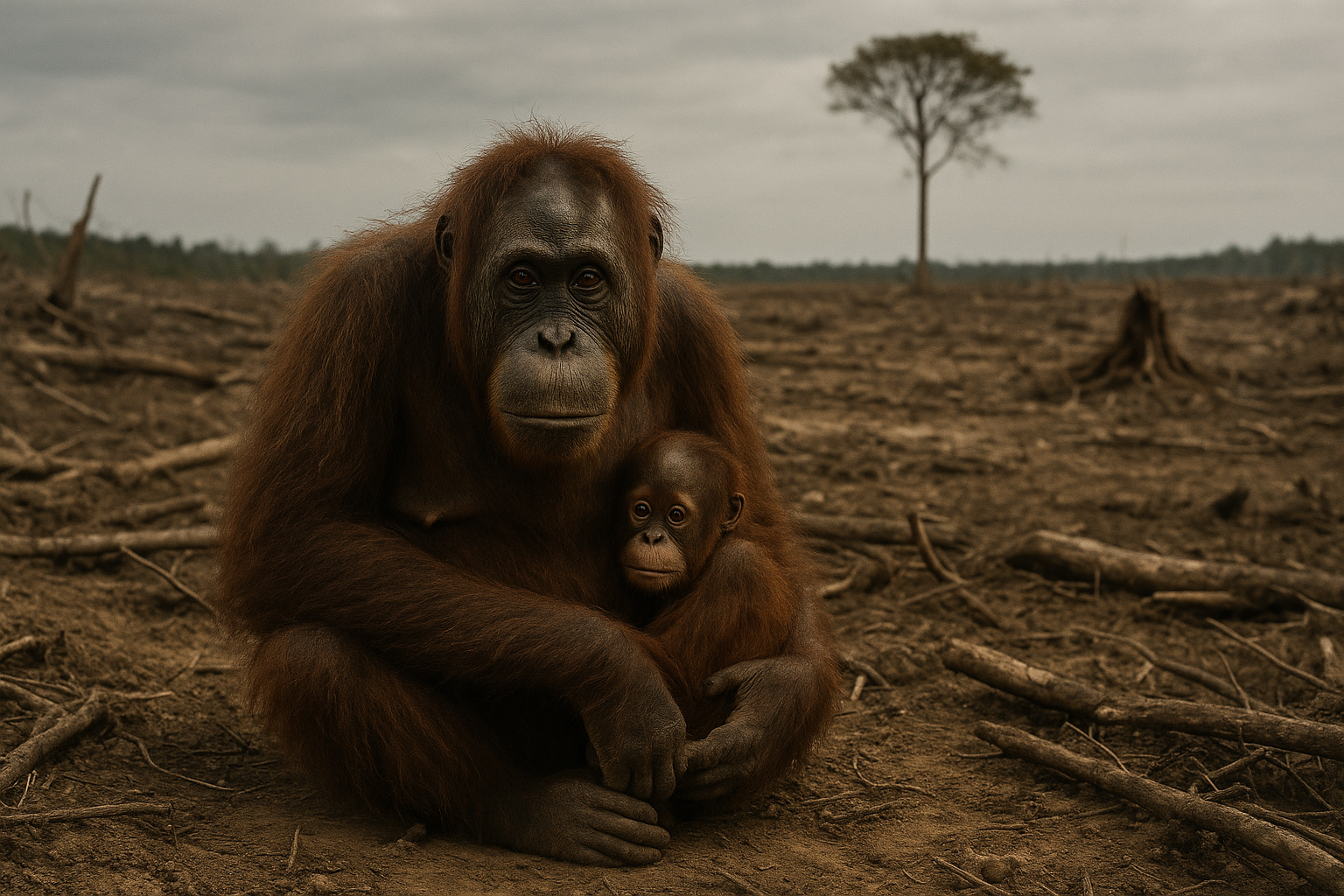
There is a sound we are no longer hearing.
It is not dramatic. It does not announce itself with explosions or headlines. It disappears slowly, species by species, ecosystem by ecosystem, until one day the silence becomes noticeable.
This is the sound of biodiversity collapsing.
Extinction is not an accident
The rapid loss of species across the planet is often framed as unfortunate, complex, or unavoidable. It is none of these.
It is the direct consequence of an extractive worldview — one that treats land, water, forests, oceans, and climate as resources rather than living systems. When intelligence is trained to take rather than to listen, extinction becomes a by-product.
Habitats are not “spaces” — they are relationships
A habitat is not merely a location on a map.
It is:
• temperature
• humidity
• soil chemistry
• microbial life
• plant networks
• seasonal rhythms
• migration pathways
• acoustic environments
• electromagnetic and atmospheric fields
When we remove forests, drain wetlands, fragment oceans, acidify seas, or destabilise climate patterns, we are not “changing environments.” We are breaking relationships that took millions of years to stabilise.
Species do not fail to adapt because they are weak. They fail because the conditions of coherence are destroyed faster than life can re-phase.
Climate change is a habitat killer
For many species, climate change is not an abstract future threat. It is an immediate erasure of the narrow conditions they require to live.
A few degrees of warming is not “small” to:
• coral systems
• alpine species
• insects with temperature-bound life cycles
• migratory animals dependent on seasonal cues
We are not just warming the planet. We are moving the goalposts of existence faster than evolution can respond.
Extraction blinds us to what we are losing
Reductionist thinking values what can be:
• counted
• priced
• extracted
• scaled
Biodiversity resists all of these.
You cannot replace:
• a pollination network
• a soil microbiome
• a reef ecosystem
• a rainforest canopy
• a keystone species
with technology once it is gone.
What we call “natural capital” is not capital at all. It is the operating system of life.
This is not about saving nature — it is about recognising dependency
Nature does not need us to survive.
We need:
• stable climates
• fertile soils
• pollinators
• clean water cycles
• resilient ecosystems
Biodiversity loss is not a tragedy happening out there. It is a warning signal from the system that sustains us. A civilisation that undermines biodiversity is undermining its own future intelligence.
A resonance-based civilisation would protect conditions, not just species
In a civilisation aligned with coherence:
• preservation would focus on habitat integrity, not symbolic rescue
• land use would be guided by ecosystem thresholds
• cities would be designed as participants in ecology, not interruptions
• climate action would be framed as restoring livability, not meeting targets
• science would prioritise system health, not isolated variables
Protection would not be charity. It would be self-understanding.
Where ARPI stands
ARPI approaches biodiversity loss not as an environmental issue alone, but as a systems failure rooted in extractive models of reality. By advancing a coherence-based understanding of physics, intelligence, and organisation, ARPI seeks to inform technologies, economies, and decision-making frameworks that protect the conditions life depends on — before collapse becomes inevitable.
This work begins upstream, where assumptions are formed and futures are shaped.
Closing
A civilisation that measures progress by extraction will eventually extract itself into instability.
A civilisation that learns to measure coherence, resilience, and diversity may still find its way back into balance — not by controlling nature, but by understanding how deeply it belongs to it.
In a finite world, coherence is not optional — it is the condition for survival.