ARPI Insight
The Measure of a Civilisation
Why how we treat animals reveals the limits of our science
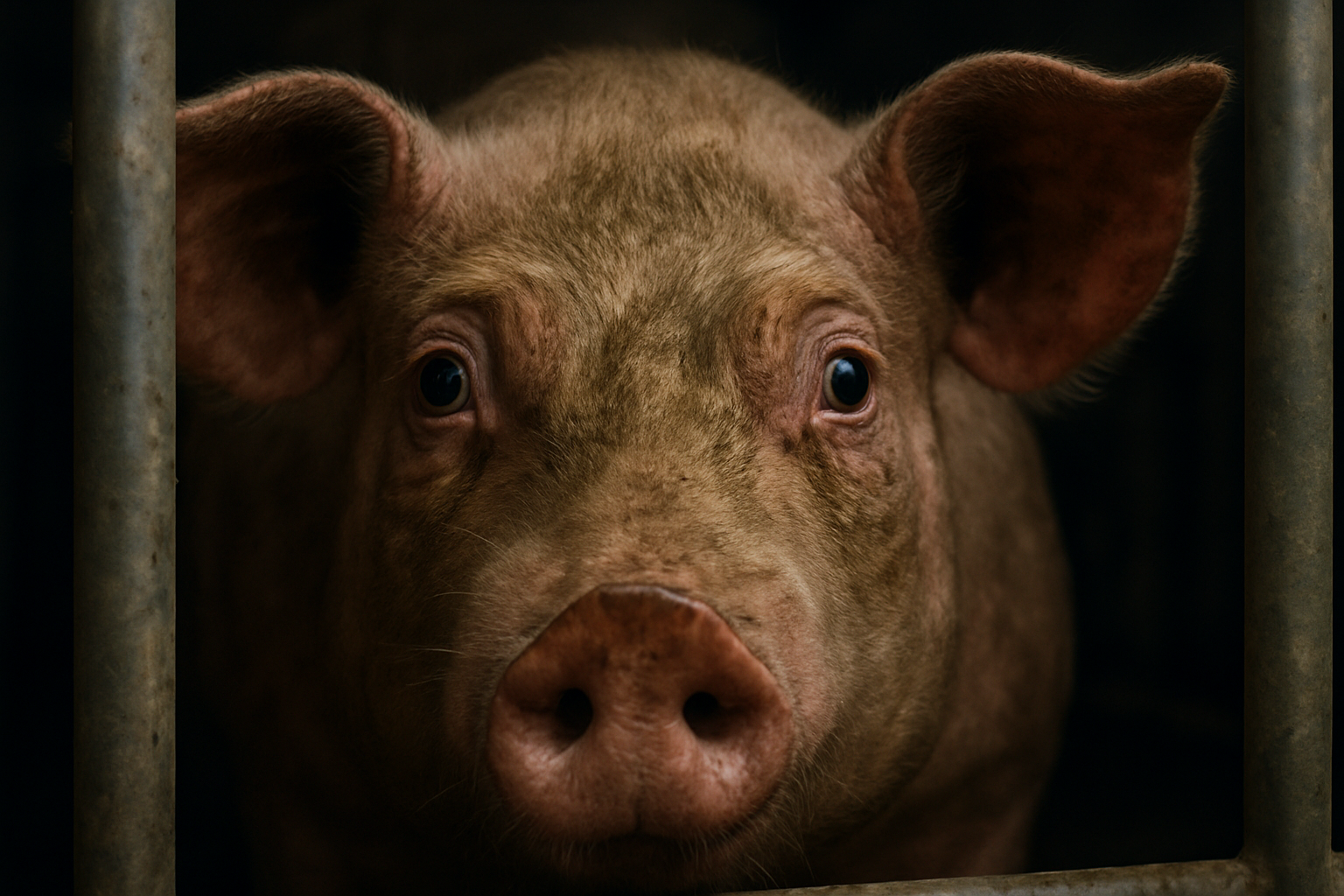
There is a quiet test every civilisation eventually faces. It is not technological. It is not economic. It is not even moral in the way the word is usually used.
It is this:
How do you treat the intelligences that cannot argue back?
The contradiction we live with
Modern civilisation claims to study intelligence, complexity, coherence, and life itself — while simultaneously organising the systematic suffering of billions of sentient beings. This is not hypocrisy. It is a model failure.
You cannot claim to understand intelligence while denying it wherever it is inconvenient.
You cannot claim to study life while reducing living beings to units of production.
You cannot claim coherence while institutionalising dissonance.
Animals are not resources — they are resonant systems
Animals are not primitive machines running on instinct.
They are:
• sensing
• learning
• emotional
• relational
• field-coupled
They regulate, communicate, remember, grieve, play, and adapt — not as metaphors, but as measurable biological realities.
The only reason this has been historically denied is because reductionist science needed them to be simple. When a model cannot accommodate complexity, it removes it.
3. Reductionist physics enabled industrial cruelty
The same worldview that:
• treats matter as inert
• treats consciousness as accidental
• treats fields as secondary
• treats zero as a true nothing
also makes it easy to believe:
• animals are replaceable
• suffering is externalised
• efficiency overrides empathy
• violence can be abstracted away
Factory farming is not an ethical accident. It is the logical outcome of a worldview that confuses control with understanding.
Intelligence without compassion becomes extractive
Every intelligent system optimises for what it values.
If compassion is excluded from the model:
• intelligence optimises extraction
• systems become predatory
• life becomes collateral
This is true for:
• human institutions
• economic systems
• technologies
• and future AI
Any intelligence trained in a civilisation that normalises animal suffering is being trained in moral incoherence — whether we admit it or not.
The feedback loop nobody wants to name
Violence toward animals does not stay contained.
It feeds back into:
• human psychology
• children’s emotional baselines
• social desensitisation
• ecological instability
• technological ethics
A civilisation cannot repeatedly practice domination over the voiceless and expect gentleness to emerge elsewhere. Dissonance propagates.
A resonance-based civilisation would choose differently
In a civilisation guided by resonance rather than reduction:
• animals would be recognised as co-participants in Earth’s intelligence
• food systems would be designed around nourishment, not throughput
• farming would resemble ecology, not manufacturing
• scientific literacy would include sentience, not deny it
Not because of ideology. But because the model would finally match reality.
Where ARPI stands
ARPI exists to address these contradictions at their root. By re-examining the physical and conceptual models that define intelligence, value, and optimisation, our work seeks to ensure that future systems — human and artificial — no longer treat sentient life as expendable.
A civilisation cannot claim coherence while denying it to the living beings within it.
Closing
The measure of a civilisation is not found in its technologies alone, but in the scope of intelligence it is willing to recognise.
Animals may not speak our language — but they reveal, with quiet precision, whether our understanding of life is deep enough to deserve the future we are building.
In a finite world, coherence is not optional — it is the condition for survival.